Born to Disrupt – Nada Shaheen on Building Africa’s Innovation Future with CVC
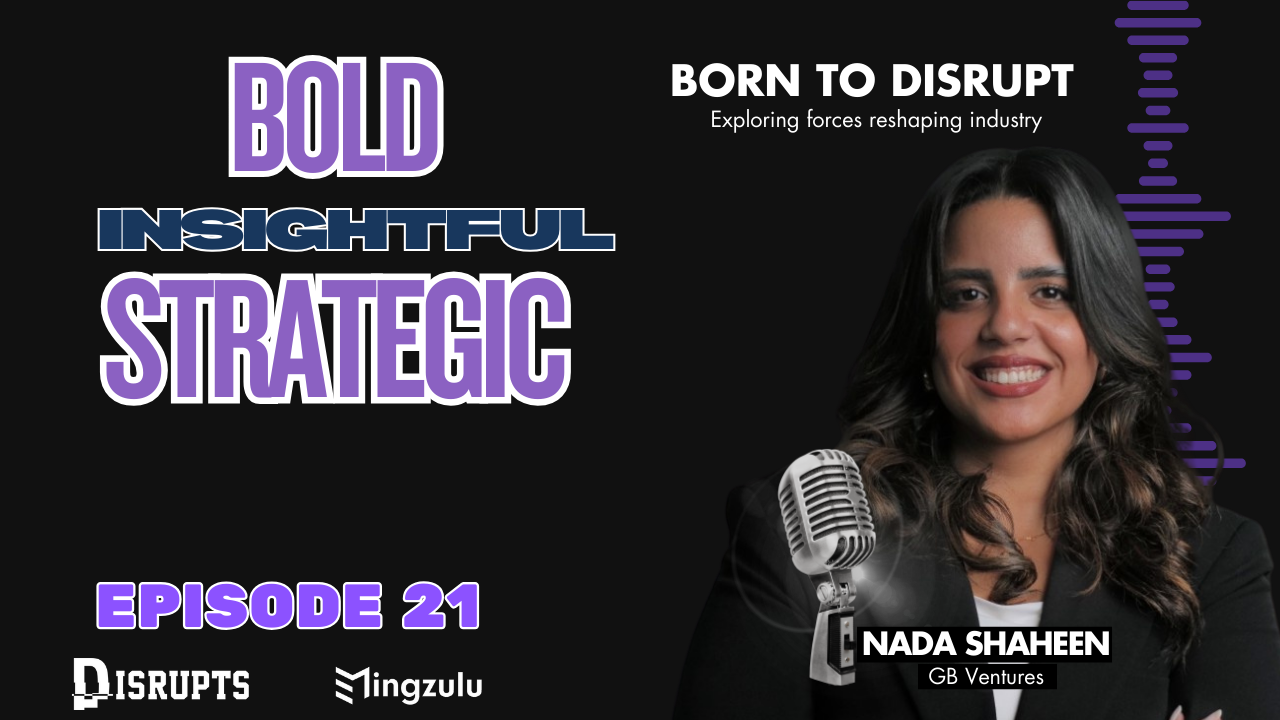
In this episode of Born to Disrupt, hosts Mark Walker and Simone Hardie speak with Nada Shaheen, the first woman to lead a corporate venture capital fund in Africa. Nada shares her journey building Egypt’s pioneering CVC arm for GB Corp and reveals how she navigated resistance, built commercial traction, and used data to transform internal mindsets around innovation.
Corporate venture capital has emerged as one of the most influential forces shaping innovation across global markets, but in Africa, the model carries unique complexity, urgency, and opportunity. Few understand this better than Nada Shaheen, the first woman to lead a corporate venture capital fund on the continent and a central figure advancing startup collaboration across Egypt and Africa. Speaking on the Born to Disrupt podcast, Nada offered a rare inside look at what it takes to build a thriving CVC unit in an emerging market and why the automotive and mobility sector represents one of the continent’s biggest innovation frontiers.
Nada’s journey into corporate venture capital was anything but conventional. With more than a decade immersed in Egypt’s startup ecosystem, she worked closely with government entities, banks, accelerators, and founders, giving her a panoramic understanding of the innovation landscape. When a major corporate approached her seeking clarity on Egypt’s startup ecosystem, she began by briefing the board on market dynamics, success stories, and partnership models. Their response, as she recalls, was blunt, “We don’t understand what you are saying.” Yet this confusion opened the door to opportunity.
Invited to join the company and build the model from scratch, Nada quickly learned that CVC in Egypt lacked both precedent and acceptance. Corporates, by nature risk averse, viewed startups as uncertain and volatile, preferring internal development over external collaboration. Early attempts to introduce venture thinking were met with hesitation, rejection, and cultural resistance.
Recognising that persistence alone would not shift mindsets, Nada redesigned her approach. She began by asking board members about their goals, challenges, and long term ambitions. With this insight, she built a strategy aligning innovation directly to commercial needs. Her early focus was not investment, but integration.
By identifying startups whose solutions aligned with logistics, fintech, or automotive priorities, she facilitated commercial contracts that delivered tangible revenue to internal business units. These results became the proof point the organisation needed. As she explains, “Unless the corporate saw tangible results, they would never believe in the model.”
Crucially, Nada framed ROI beyond financial returns. She tracked strategic impact, brand positioning, and the cultural shift innovation can unlock. This helped board members understand that CVC was not just about deploying capital, but about strengthening the organisation’s long term competitiveness.
One of her biggest wins came when GB Corp realised that internal product development was not always the optimal path. After spending years trying to build a platform in house, the company eventually pursued an investment into a startup whose core expertise exceeded their own. The outcome was smoother, faster, and more impactful, validating Nada’s argument that corporates benefit most when they invest where others already excel.
Her approach also reframed CVC as a tool for strategic market expansion. Africa is vast and incredibly diverse, with each region presenting different regulations, cultural norms, and market maturity. Rather than relying solely on traditional market studies, Nada advocates investing in local startups as a path to real in market insight.
“Startups provide the most realistic view of the market,” she says. By co investing with local VCs and building relationships across North Africa, Sub Saharan Africa, and beyond, GB Corp reduces risk while gaining authentic intelligence needed for successful expansion.
The conversation also highlights the immense potential emerging in Africa’s mobility and automotive sector. Inspired by global advancements, especially China’s rapid rise in electric mobility, Egypt aims to build a strong local manufacturing base, introduce electric vehicles across commercial and passenger segments, and prepare for autonomous technologies. This includes launching new assembly facilities and fostering partnerships with startups shaping the future of transportation.
Nada notes that while infrastructure gaps remain real, the opportunity is too big to ignore. With Africa’s young population, expanding urban centres, and increasing digital adoption, mobility innovation could reshape entire industries and unlock significant economic growth.
Reflecting on her proudest achievements, Nada cites two standout moments. First, when internal teams began proactively requesting startup partnerships a complete reversal from the early scepticism she faced. And second, the milestone of backing a fintech that achieved unicorn status, affirming that African innovation is not just promising, but globally competitive.
Nada’s journey demonstrates the power of persistence, strategic alignment, and cultural understanding in building corporate venture capability in emerging markets. Her work proves that when corporates embrace innovation, partner with startups, and remain open to new models, they can reshape industries and accelerate economic transformation.
As Africa enters a new chapter of mobility, manufacturing, and digital disruption, leaders like Nada Shaheen are lighting the path for the next generation of innovators.