Digital asset tokenisation transitions from pilot fatigue to production readiness
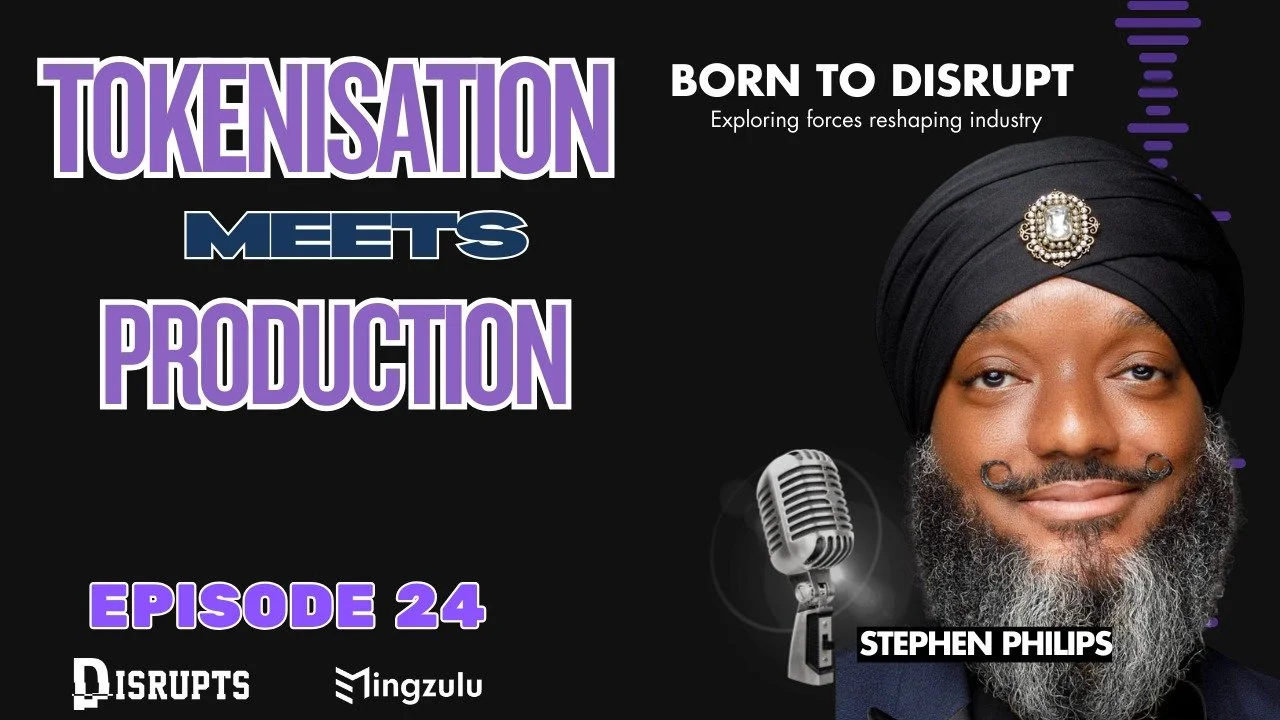
Hosts Mark Walker and Grant Niven are joined by Stephen Philips to explore the rapidly changing landscape of digital assets. With extensive engineering and blockchain experience spanning the Caribbean, Europe, Africa, and the Middle East, Stephen shares valuable insights into how tokenisation is transitioning from policy to production. The episode dives into the practical applications of Central Bank Digital Currencies (CBDCs), stablecoins, and the fundamental distinction between backed and unbacked assets.
Global financial markets are entering a transformative phase as blockchain technology and digital assets move beyond experimental sandboxes and into viable production.
Speaking on the Born to Disrupt podcast, co-produced by media platform Disrupts and management consultancy MingZhulu, industry veteran Stephen Philips confirmed that tokenised ecosystems are rapidly cementing their place within conventional finance.
Philips, whose career traverses telecommunications engineering and widespread global blockchain infrastructure deployment, mapped out the current trajectory of digital money across diverse regulatory environments.
The general public continues to view the digital money sector with a lens of apprehension. Despite significant backend advances made by financial institutions, everyday consumers largely associate tokenised structures with volatile, unbacked cryptocurrency frameworks and speculative investments. This educational deficit remains one of the primary hurdles for mass adoption. However, increased participation from trusted tier-one and tier-two banks is gradually reshaping market sentiment and lending critical legitimacy to the underlying distributed ledger technology.
To navigate this complexity, the broader asset ecosystem must be bifurcated into two distinct streams. A simple conceptual divide separates assets that represent tangible financial claims from those driven purely by speculative supply and demand dynamics. Philips explained, "A simple way that I think everyone can understand is backed and unbacked assets". Tokenisation fundamentally operates on the principle of backed assets, where a token creates a digital, programmable representation of a traditional security, real estate, or fiat currency deposit. This provides the foundational security needed for traditional finance to engage with the technology securely.
Global regulatory divergence is creating unique regional catalysts for adoption. In developing markets across Africa, macroeconomic instability and volatile domestic currencies have frequently driven consumers toward US dollar-pegged stablecoins to protect personal wealth. Central Bank Digital Currencies (CBDCs) in these regions are primarily pursued as mechanisms to enhance basic financial inclusion. By contrast, the Middle East approaches the tokenisation economy from a strategic posture of opportunity rather than necessity. Jurisdictions like the UAE are proactively building regulatory sandboxes to attract foreign direct investment, improve remittance efficiencies, and streamline complex cross-border settlements for primary commodities.
The industry is finally emerging from a prolonged period of pilot fatigue. Following extensive proving phases, institutional clarity is solidifying, particularly following critical regulatory recalibrations in the US market. With monumental market infrastructure providers preparing to route tokenised securities online, the sector sits on the precipice of a dramatic adoption curve. When these foundational traditional finance entities migrate their processes onto blockchain rails, the sheer volume of global capital moving on-chain will decisively shift market paradigms.
For startups, fintech innovators, and agile financial institutions seeking to capture early market share, the development phase requires rigorous strategic discipline. Building in anticipation of future regulatory standards is no longer optional. The market demands institution-grade technology fortified by exhaustive security audits and robust compliance frameworks. Innovators that successfully integrate comprehensive AML and CFT safeguards directly into their infrastructure will possess the commercial agility to deploy across any global jurisdiction the moment regulatory floodgates fully open.