Navigating Risk and Disruption in Geopolitical Turmoil with Dickon Johnstone
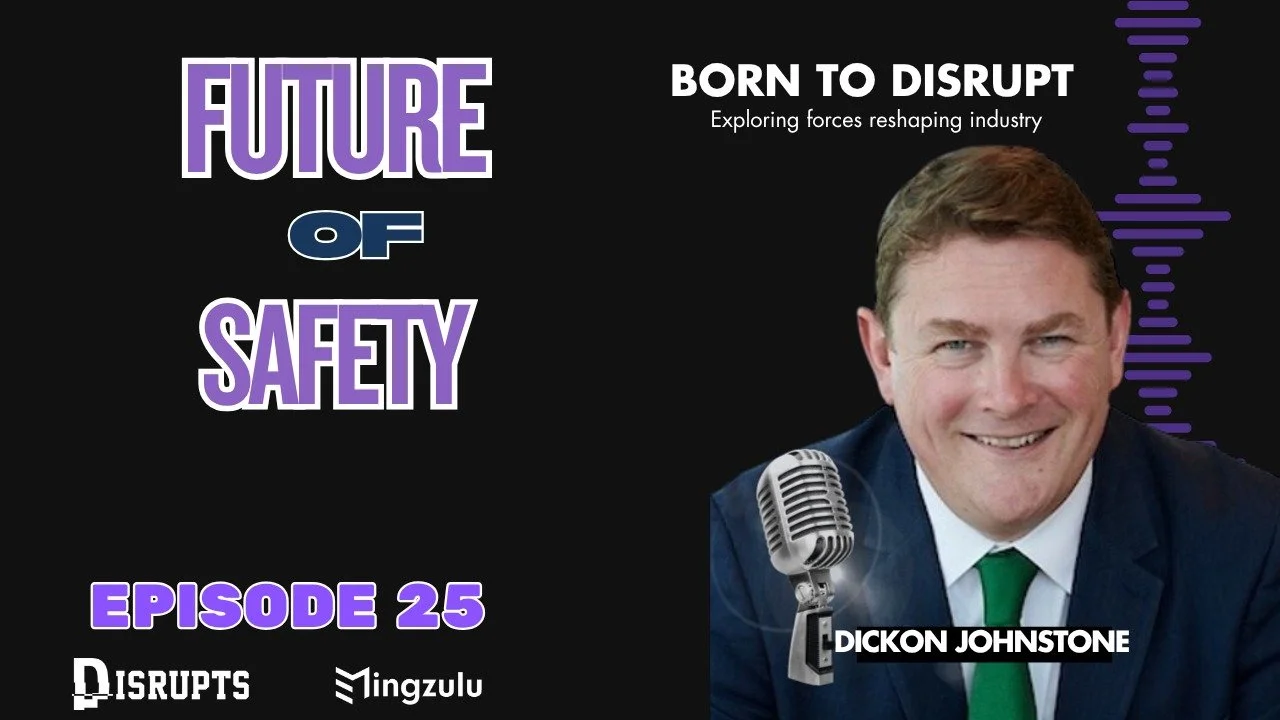
Hosts Simon Hardie and Grant Niven are joined by Dickon Johnstone, CEO and founder of Themis, to explore how AI is transforming compliance and risk management in an increasingly volatile geopolitical landscape. The conversation covers sanctions enforcement, financial crime prevention, and the growing role of AI in detecting complex cross-border threats.
In recent times, geopolitical unrest has become a significant concern for businesses worldwide. Companies need to upgrade their risk management and due diligence processes to keep pace with evolving threats. In our latest discussion with Dickon Johnstone, CEO and founder of Themis, we explore how advanced AI-driven solutions are transforming compliance, enhancing security, and enabling businesses to operate confidently amid global volatility.
How Geopolitical Tensions Transform Business Risk Strategies
The recent conflict in the Middle East exemplifies how international crises directly impact business operations and security concerns. As Dickon Johnstone explains, firms increasingly face complex challenges, from cyber enabled fraud to sanctions violations and supply chain risks.He emphasizes that "in times of geopolitical uncertainty and unrest, businesses need to invest more into their risk management systems." Elevated risks—such as cyber threats, financial fraud, and illicit trade—are compounded by the tactics of criminal organizations, which now leverage AI to diversify their illicit activities.Key Takeaway: Active risk management is not optional; it is a necessity for businesses operating in unstable regions. Companies must constantly evolve their strategies to detect and prevent emerging threats before they cause irreparable damage.
The Rise of AI in Financial Crime Detection and Prevention
A major theme in the discussion is how artificial intelligence is revolutionizing due diligence practices. Dickon highlights that Themis has built an AI-first platform capable of aggregating over 250 million company profiles and numerous sanctions lists in real time."Our platform combines AI and human intelligence to simplify and automate due diligence, enabling faster, more accurate screening," says Dickon. This technology can sift through data points—such as criminal records, political exposures, and transactional data—and generate a comprehensive risk profile within seconds.Why does this matter? Because with AI, the scope of detection expands exponentially. Themis's AI can recognize behaviors, patterns, and networks that might take human analysts weeks to uncover, drastically reducing false negatives and improving overall security.Actionable Tip: Even small to mid-sized businesses can democratize due diligence by adopting AI-powered tools, making advanced risk screening accessible and scalable.
Navigating the Challenges of AI and Geopolitical Threats
The discussion reveals a dual-edged nature of AI technology: criminal actors also harness it to conduct sophisticated fraud, deepfake scams, and identity fabrication. Dickon mentions the emergence of “fraud as a service” and the manufacturing of digital identities on the dark web.Furthermore, the proliferation of generative AI models provides both opportunities and risks. Criminals can use AI to create convincing fake content, manipulate behaviors, or hide illicit activities more effectively.Key Insight: The pace of technological change demands that organizations stay proactive—investing in continuous AI risk assessment, updating systems, and training staff. Dickon underscores that "if organizations do not incorporate AI into their platforms now, they risk falling behind—and becoming easy targets for sophisticated criminals."Best Practice: Adopt an integrated AI approach that not only detects known threats but also anticipates future risks through behavioral analysis and predictive modeling.
The Middle East as a Leader in Risk Management Adoption
Contrary to traditional perceptions, the Middle East’s GCC region is becoming a leader in adopting AI for financial crime compliance. Dickon notes, "many economies are actively investing in AI and anti-financial crime initiatives," driven by a young, tech-savvy population and rapid economic growth.Recent surveys indicate that 85% of senior regional leaders are already integrating AI into their compliance strategies. This accelerated adoption is crucial, especially considering how conflict-related risks—such as sanctions evasion and proxy networks—are now at the forefront of strategic concerns.Regional Impact: As conflict in the Middle East persists, companies are increasingly aware of the need for real-time monitoring, comprehensive screening, and deep due diligence to prevent inadvertent involvement with illicit actors.Future Outlook: The conflict has catalyzed a paradigm shift, turning risk management from a compliance checkbox to a strategic asset and growth enabler.
The Demystification of Due Diligence and Embracing Digital Transformation
Dickon champions the idea of “democratizing due diligence”: making sophisticated risk assessment accessible to all businesses regardless of size or industry. His platform aims to enable even non-specialists to generate thorough risk reports simply by inputting minimal data—like a company website.This democratization allows smaller enterprises to protect themselves from unintended associations with sanctions or criminal networks, which previously only large institutions could afford to do effectively.
Core Benefits:
Faster decision-making
Better compliance adherence
Reduced reliance on legacy, static systems
Enhanced ability to identify hidden networks and dual-use goods
Expert Tip: Embracing AI-driven due diligence isn’t just about compliance—it's a strategic move to unlock new growth opportunities by onboarding legitimate partners confidently.
Looking Ahead: The Next 3-5 Years for Risk and Compliance
When asked about future developments, Dickon predicts a significant shift toward integrated, AI-powered risk management ecosystems. He envisions platforms becoming conversational, leveraging voice and natural language processing to enable easier interaction and deeper insights."Traditional due diligence will evolve," Dickon says, "with AI providing continuous, real-time monitoring, predictive analytics, and behavioral insights. This will redefine how companies understand and respond to threats."The ongoing investment in AI by governments and private sectors indicates a future where risk management is seamless, proactive, and integral to strategic growth—especially in regions like the GCC, which are quickly becoming pioneers.
Final Word for Business Leaders and Policymakers
In closing, Dickon advises CEOs and regulators to prioritize the integration of AI into risk management frameworks. "Now is the time to implement systems that help manage your risk—before a crisis strikes," he emphasizes.The increasing scale and sophistication of financial crime demand that organizations think beyond traditional measures. The use of AI enhances detection, expedites decision-making, and secures business continuity in an uncertain world.Call to Action: Ensure your risk systems are future-ready—embrace AI, invest in continuous learning, and stay vigilant against emerging international threats.
FAQ: Navigating Risks in a Disrupted World
How is AI changing due diligence processes?AI automates the screening of vast data sources, enabling faster and more comprehensive risk assessments. It detects hidden networks, dual-use goods, and behavioral patterns that traditional methods might miss.Can small businesses benefit from AI in risk management?Absolutely. AI tools are becoming more accessible and scalable, allowing small and medium enterprises to perform advanced due diligence without extensive resources.How does geopolitical conflict influence financial crime risks?Conflicts often lead to increased sanctions, proxy networks, and illicit trade. These activities are facilitated by sophisticated financial crime tactics, which AI can help detect and prevent.Will AI replace human investigators?No. AI acts as an enabler, empowering human experts to focus on complex judgments and strategic decision-making with enhanced data insights.What role is the Middle East playing in AI adoption?The GCC is transforming from a follower to a leader in adopting AI for compliance and risk management, driven by economic growth, youthful populations, and regional stability efforts.
By embracing AI and digital transformation, businesses can turn risk management into a strategic advantage—even amid geopolitical uncertainty. As Dickon Johnstone and Themis demonstrate, the future belongs to those who are proactive, innovative, and vigilant in protecting their operations and stakeholders.