Ulf Zetterberg Launches Digital Mirror to Close Contract Value Gap
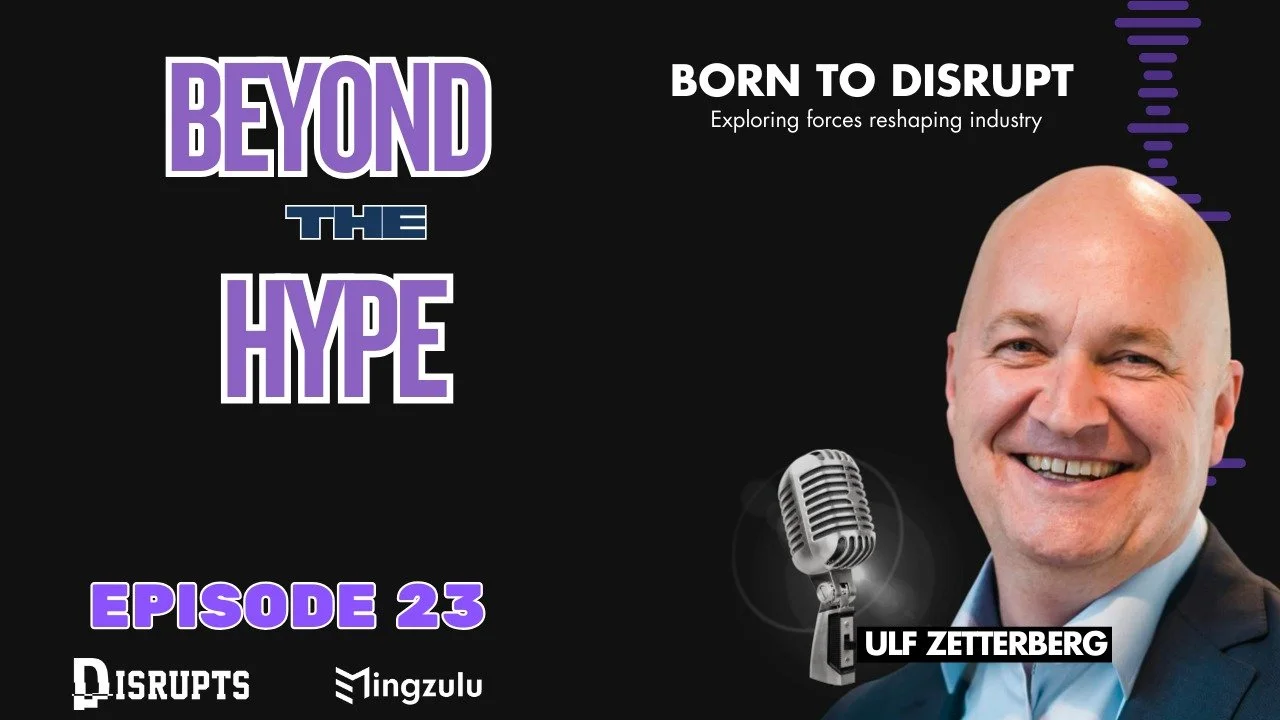
In this episode of Born to Disrupt, hosts Grant Niven and Mark Walker sit down with Ulf Zetterberg, the founder of Seal Software and now the driving force behind Digital Mirror. Recording from the US, Dubai, and the UK, the trio dives into the next evolution of legal tech: moving beyond static contract management to dynamic performance tracking.
Serial entrepreneur Ulf Zetterberg, best known for founding contract analytics pioneer Seal Software, has returned to the fintech arena with Digital Mirror, a new venture designed to solve the disconnect between signed agreements and actual business performance. Speaking on the Born to Disrupt podcast, Zetterberg outlined his vision for using AI not just to manage legal documents, but to ensure they deliver their promised financial value.
The Static Contract Problem
While the last decade of legal tech focused on digitizing and searching contracts across the market Zetterberg helped define with Seal Software - the next frontier is execution. According to Zetterberg, a significant "value gap" exists in large enterprises where complex agreements are signed but rarely audited against real-world data like invoices and ticketing systems.
"People think it's done, but you're signing a contract. You have an expectation of what's going to happen. And then life starts," Zetterberg explained. He noted that without connecting the legal document to operational data, companies struggle to answer basic questions: "Are we getting the right service level? Is the quality correct?"
New Venture - ‘Digital Mirror’
Zetterberg’s new platform, Digital Mirror, aims to bridge this divide by tying contract terms directly to live performance data. The goal is to move beyond "legal guardrails" and focus on the commercial "why" of a deal. This approach allows organizations to proactively track rate cards, rebates, and service level agreements (SLAs) that often go unmonitored in legacy ERP systems.
The venture is built around a concept Zetterberg calls the "Digital Mirror"—empowering individual employees to clone their own workflows. "If I'm sitting with a spreadsheet today to tracking performance of a vendor, why can't I make a copy of my little workflow and automate and let me be more effective?" he asked. This "mini-me" approach decentralizes automation, allowing subject matter experts to drive efficiency without waiting for top-down IT overhauls.
AI is Not Psychic
Despite the rush to adopt generative AI, Zetterberg urged caution, warning that technology cannot fix broken processes or bad data. "AI is not psychic. You need to apply it to something," he said. "If you don't have the right data, you don't know what good data versus bad data means for you."
He advised executives to look past the daily noise of the "AI bubble" and focus on pragmatic, defined use cases. For Digital Mirror, AI serves as the connective tissue that links disparate data silos—legal, procurement, and finance—allowing for a cleaner view of business reality without requiring a rip-and-replace of existing systems.
Outcome-Based Pricing Models
The improved visibility offered by tools like Digital Mirror could also accelerate a shift toward outcome-based commercial models, where vendors are paid based on results rather than time or headcount. While acknowledging the political challenges this creates in large organizations—where admitting past inefficiencies can be risky—Zetterberg believes the shift is inevitable. "It doesn't make sense to pay for something that is based on the number of users... when you can be a little bit more aggressive on your price models by offering it and trusting you're going to deliver value," he noted.
The Human Element
Returning to the founder’s Seal Software after his exit to DocuSign in 2020, Zetterberg emphasized that while technology scales, business remains a "team sport." He championed a hybrid work model that values the "tribal knowledge" shared at the physical water cooler, which remote tools often fail to capture.
"You have things that do not necessarily sit in the onboarding guide," Zetterberg said. "It's those things that make most companies really click."
Next Steps for the Industry
As enterprises face increasing pressure to protect margins and justify spend, the ability to audit complex service agreements in real-time is becoming critical. Zetterberg’s return signals a maturing of the market: moving from simply storing contracts to actively managing the commercial relationships they represent.
"The contract is pretty much a living thing because the world around it changes," Zetterberg concluded. "To be able to answer the question of 'why' is also critical when alignment expectations to any commercial agreement."